Final Expense Calculator
Use this Final Expense Calculator to quickly estimate the total cost of end-of-life expenses, including medical bills, funeral costs, outstanding debts, and other last expenses. This practical tool helps families, executors, and individuals plan and budget for final financial obligations.
What this Final Expense Calculator does
The Final Expense Calculator provides a simple, clear estimate of the total funds likely required to settle final expenses after death. It consolidates multiple categories into one total so you can:
- See a single total you can use for financial planning or insurance decisions.
- Compare expected costs to available resources such as life insurance, savings, or pre-paid funeral plans.
- Identify gaps in funding that might require additional coverage or planning.
This calculator is ideal for quick planning and should be combined with professional advice for detailed estate planning.
How to use the Final Expense Calculator
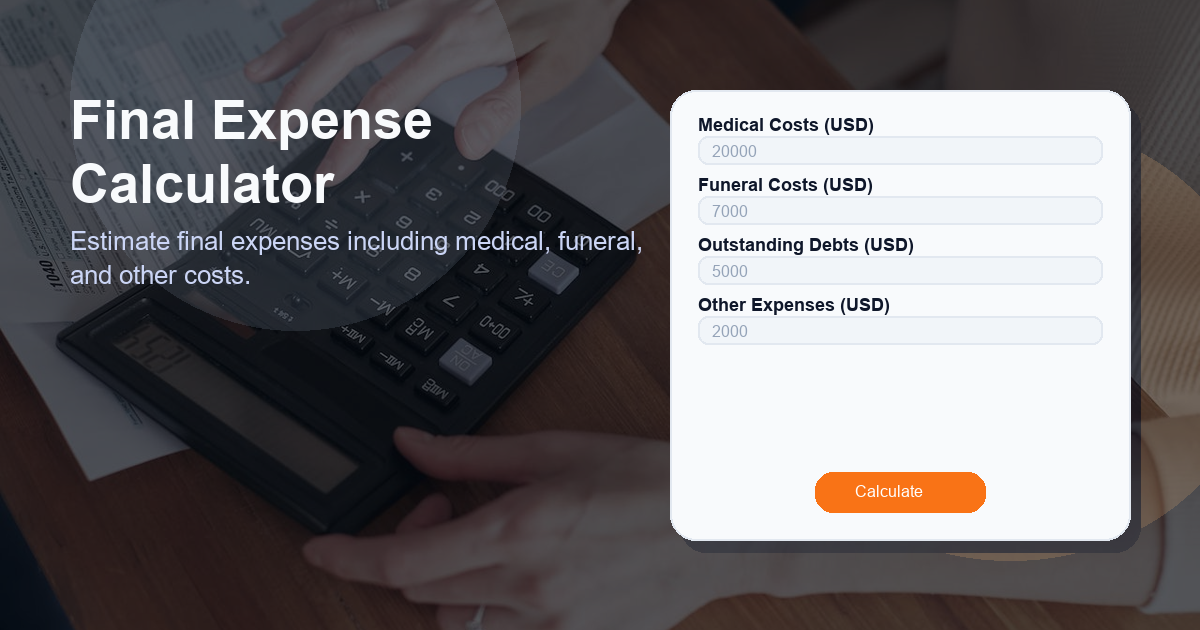
Using this calculator is straightforward. Enter your best estimates for each input category in USD and click “Calculate”. The calculator will display the Total Final Expenses, which is the sum of all inputs.
- Inputs required:
- Medical Costs (USD)
- Funeral Costs (USD)
- Outstanding Debts (USD)
- Other Expenses (USD)
- Result label: Total Final Expenses
- Formula used: medical_costs + funeral_costs + debts + other_expenses
Total Final Expenses: $0.00
How the Final Expense Calculator formula works
The calculator uses a single, transparent formula:
medical_costs + funeral_costs + debts + other_expenses = Total Final Expenses
Here’s a quick breakdown of each component:
- Medical Costs: Outstanding hospital bills, hospice care expenses, ambulance fees, and any unpaid medical invoices that may be billed after death.
- Funeral Costs: Burial or cremation fees, casket or urn cost, funeral home fees, transportation, obituary notices, and flowers.
- Outstanding Debts: Credit card balances, personal loans, mortgages, car loans, and any legally collectable debts that must be settled from the estate.
- Other Expenses: Executor fees, probate costs, legal and administrative fees, outstanding taxes, unpaid utilities, and any miscellaneous obligations.
The calculator intentionally keeps the math simple so the result is easy to interpret: add the four categories to get your Total Final Expenses. Use conservative estimates to avoid under-planning.
Use cases for the Final Expense Calculator
The Final Expense Calculator is useful in many scenarios. Common use cases include:
- Estate planning: Estimate how much life insurance or savings are needed to cover final obligations.
- Pre-need planning: Evaluate whether pre-paid funeral plans or burial insurance will cover expected funeral costs.
- Personal budgeting: Individuals who want to set aside funds or purchase final expense insurance to avoid leaving burdens to loved ones.
- Executor guidance: Executors and family members can estimate estate liabilities quickly before consulting legal or financial professionals.
- Advisors and agents: Financial advisors, insurance agents, and estate planners can use the calculator to illustrate funding gaps during client meetings.
For professional or legal decisions, use the calculator as a starting point and confirm figures with invoices, contracts, or legal counsel.
Other factors to consider when calculating final expenses
While the calculator gives a useful baseline, several additional factors can affect the final amount you should plan for. Consider the following:
- Inflation: Funeral costs and medical fees typically rise over time. If planning years ahead, account for inflation.
- Regional differences: Funeral and medical costs vary widely by location—research local averages.
- Insurance coverage: Check existing life insurance, health insurance, and any pre-paid funeral contracts to subtract covered amounts from totals.
- Tax liabilities: Estate taxes or final income taxes may increase the estate’s liabilities in some jurisdictions.
- Legal and probate fees: Probate proceedings or estate disputes can add substantial costs; consider potential legal fees.
- Contingencies: Unexpected obligations or delayed invoices may arise—adding a contingency buffer (e.g., 10–20%) helps avoid shortfalls.
Use these considerations to refine the estimate from the calculator and to make informed decisions about coverage, savings, or pre-planning options.
FAQ
Q: What is a final expense calculator and why should I use one?
A: A final expense calculator is a tool that adds up expected end-of-life costs—medical bills, funeral costs, debts, and other expenses—to produce a single estimate called Total Final Expenses. It’s useful for planning, budgeting, and determining insurance needs.
Q: Are the results from the Final Expense Calculator guaranteed?
A: No. The calculator provides an estimate based on your inputs. Actual costs may vary. Treat the result as a planning guide and consult professionals for legally binding or detailed financial planning.
Q: Can I include funeral prepayment or life insurance in the calculation?
A: Yes. If you have pre-paid funeral plans or life insurance assets earmarked for final expenses, subtract their value from the calculated Total Final Expenses to estimate any remaining funding gap.
Q: How should I estimate medical and other variable costs?
A: Use the most recent bills or estimates from providers when available. If uncertain, use conservative or slightly higher estimates and consider adding a contingency percentage to cover unexpected charges.
Q: Is this calculator a substitute for legal or financial advice?
A: No. While the calculator helps with preliminary planning, consult an attorney, financial planner, or tax professional for comprehensive estate planning and legal requirements.
Ready to plan with confidence? Enter your best estimates above and use the Final Expense Calculator to determine your Total Final Expenses today.